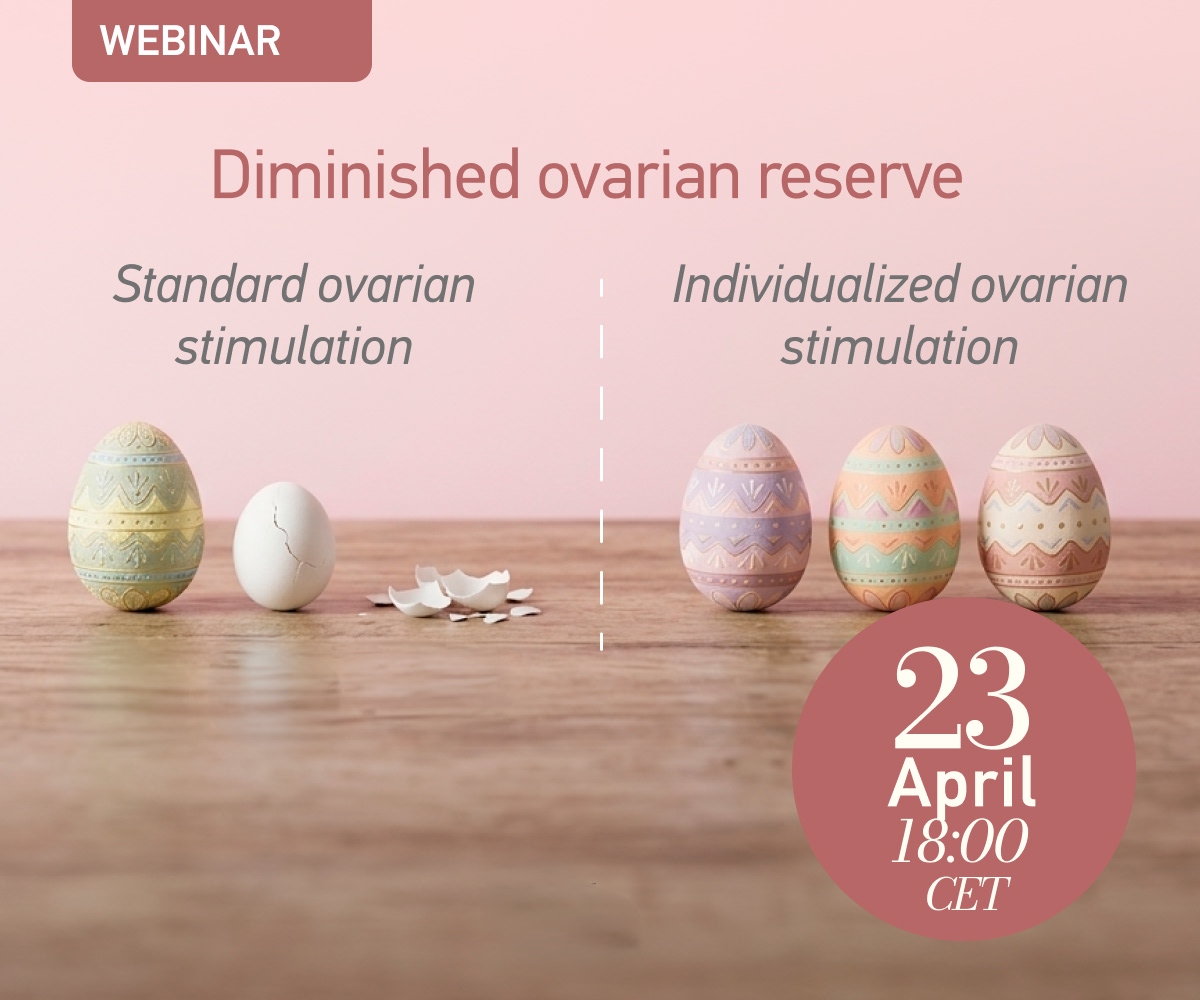
 Individualized ovarian stimulation
for patients with diminished ovarian reserve
Individualized ovarian stimulation
for patients with diminished ovarian reserve
Patients with diminished ovarian reserve (DOR) usually have a more challenging IVF process than normal reserve patients of the same age.
To achieve the number of MII eggs comparable to a single cycle harvest in a normal reserve patient, a DOR patient will need several cycles which means more time, money and effort.
In the majority of normal reserve patients, a standard protocol will be successful.
In DOR patients an individual well thought through ovarian stimulation is the only way. Each additional MII egg may make the number of eggs per cycle double.
DOR patients not only have a low number of follicles but also tend to asynchronous follicular growth in response to a standard protocol.
What is the benefit of having 3 follicles responding to stimulation when at the end of the day only one of them will provide a mature egg?
Because follicles grow at a different pace in response to a standard stimulation, the trigger shot is given when the largest follicle is large enough, but the others are still too small to provide a mature egg.
Had they grown at the same pace, each of them would have provided a mature egg, which would have been triple.
The two main goals of individualized ovarian stimulation in DOR patients are:
- To influence the ovary before ovarian stimulation begins so that more follicles are available to respond to forthcoming stimulation
- To influence these follicles so that all of them grow at the same pace and each of them provides a mature egg
If you have diminished ovarian reserve and would like to increase your chances of successful pregnancy using your own eggs, join our webinar 23 April at 18:00 CEST
In this webinar we will discuss:
- How to influence the ovary in DOR patients so that more follicles are available to respond to ovarian stimulation?
- How to achieve synchronous growth of those follicles so that all of them result in mature eggs?
- How to achieve not only nuclear maturity of those eggs but also cytoplasmic maturity?
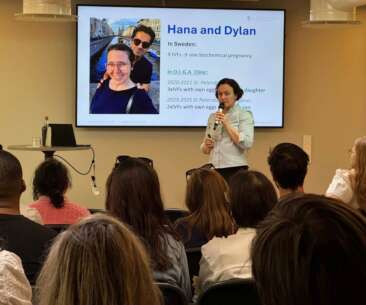
In this webinar we will also introduce some of our former patients with reduced ovarian reserve and discuss their individual successful processes, together with them we will also be answering your questions.⠀
We are looking forward to welcoming you to our webinar!

Because of multiple reasons of miscarriages and IVF failures we split IVF process in parts to solve each of them and achieve live birth
By Dr. Olga Zaytseff
The founder of O.L.G.A. Clinic
How to identify challenges, grow competent eggs, create viable embryos and screen them
By Dr. Olga Zaytseff
The founder of O.L.G.A. Clinic
This webinar about optimizing uterus by hysteroscopy, boosting uterine lining by specific medication, precise timing of embryo transfer with the help of ERA test, hormonal and immune treatment
By Dr. Elena Lapina
Head doctor and co-founder of O.L.G.A. Clinic
How to identify and solve them to achieve successful pregnancy and live birth
By Dr. Elena Lapina
Head doctor and co-founder of O.L.G.A. Clinic
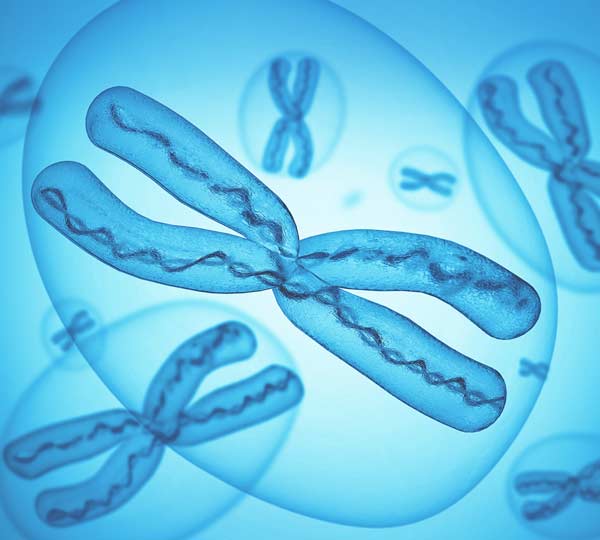
Hot and controversial topics explained from the very beginning — basic genetics, indications, embryo biopsy and freezing, challenges, results and new frontiers
By Dr. Anna Gusareva
Embryo Lab Chief at O.L.G.A. Clinic
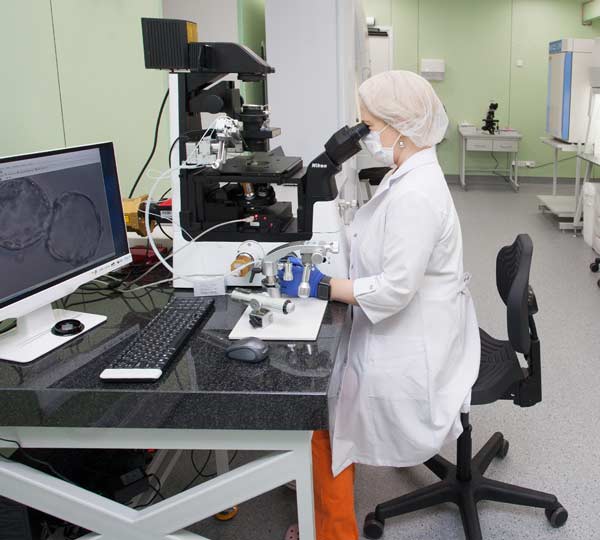
How embryos are created and grow in the lab? How embryologists make sure that embryos feel at home in the lab? How to choose the best embryo that will result in live birth?
By Dr. Anna Gusareva
Embryo Lab Chief at O.L.G.A. Clinic


How to make decision and process comfortable and friendly for you, and your result — efficient.
By Dr. Olga Zaytseff
The founder of O.L.G.A. Clinic
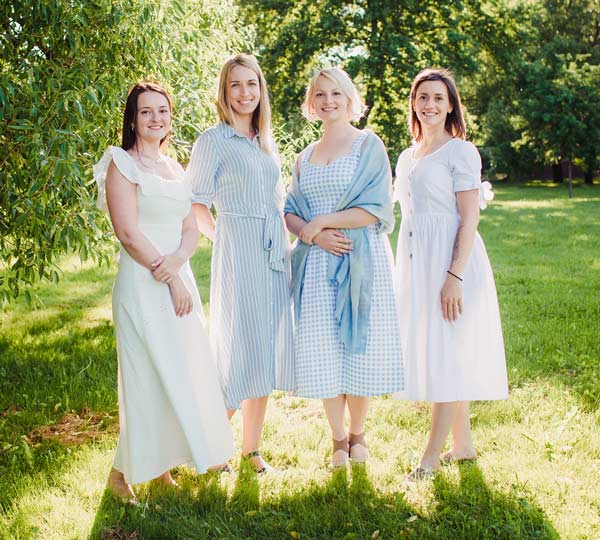
Valeria shares different aspects of her work and show even examples of excellent egg donor choices based on physical characteristics and non-physical parameters, such as education, personal motivation, occupation...
By Valeria Sergeeva
The leading egg donation expert at O.L.G.A. Clinic
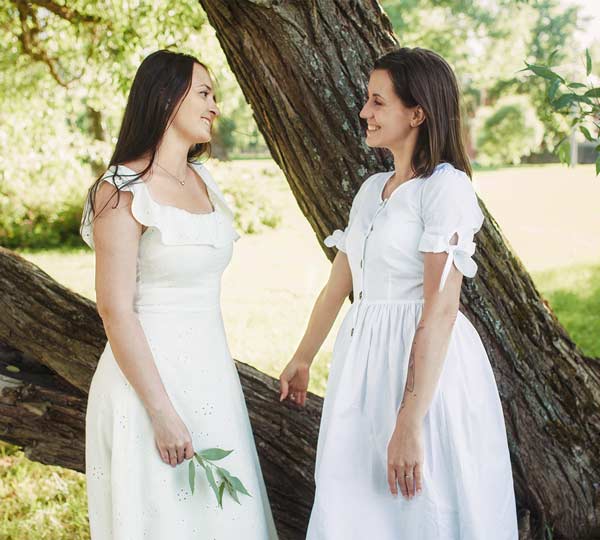
Egg donation… Embryo adoption…
How normal is the whole process? Who are the donors and what I should/can know about them? Where is the border of my influence?
By Valeria Sergeeva
The leading egg donation expert at O.L.G.A. Clinic
We prepared a very special video where egg donors personally tell about themselves, their principles of life, their reasons to donate and the philosophy of this huge project called "Egg Donation" at O.L.G.A Fertility Clinic
By Valeria Sergeeva
The leading egg donation expert at O.L.G.A. Clinic

By Tatiana Varzaeva
Perinatal psychologist at O.L.G.A. Clinic